Showing posts with label Lidia Bastianich. Show all posts

Thursday, February 17, 2011

Labor of Love


Food and love are inextricably knotted together. Think of a favorite childhood memory and it’s probably tied to food: baking cookies with your Grandmother, your mom making your favorite meal for your birthday. As a child, I had the most fabulous birthday cakes because my Aunt Sally was a supreme cake decorator. The one I can picture most vividly right now was a four-part choo-choo train. It was frosted in pale orange with the wheels and windows outlined in flourishes of a darker pumpkin-colored frosting. The cars of the train held mounds of candy “cargo” – licorice pieces, and I think those chewy candies in the shape of peanuts. Somewhere in my parents house is a picture of me with cheeks puffed out trying to blow out the candles on this fantastic cake train. What an ultimate display of love to take the time to create such a detailed and artistic cake.

Bechamel Sauce
Making and serving food to your loved ones says, “I love you so I want to nourish your body and give you pleasure.” In a microwave-fast, out-of-a-box, drive-through food society it’s something that’s easily forgotten. Food isn’t just calories and fuel, it’s love.

This Valentine’s Day, Trevor and I celebrated at home. Sometimes when we’re flush we’ll take a weekend trip or try a fancy restaurant we’ve heard good things about. This was not one of those years. But it wasn’t any less special. I said I’d make Meat and Spinach Cannelloni from Lidia Bastianich’s Italian-American Kitchen. And Trevor was in charge of picking up some dessert.

Lidia’s cannelloni is truly a labor of love. It takes about four hours to make, even for someone who is quick in the kitchen. But it’s a meal that just can’t be rushed. Chunks of pork butt, carrots, celery, onion (there’s the trinity again) and refreshed dried mushrooms are slowly braised in the oven with chicken stock and wine. And the liquid that remains in the pan is reserved. Then fresh pasta squares are needed. And creamy béchamel sauce has to be made. And once the meat and vegetables have roasted and cooled, they are ground up with spinach to make the delectable filling. I actually roasted the meat and veggies the day before to speed up the process a little. And as I was grinding up the filling, I couldn’t help but eat a few spoonfuls before rolling it up in the cooked pasta squares. OK, several spoonfuls.


From all that, I probably don’t even need to go into how good it tastes. It’s probably the best-tasting meal we make. And the homemade pasta elevates it even higher.

I also made Trevor’s Valentine’s Day card. What I should have put on it was, “Valentine, our love isn’t an out-of-the-box-into-the-microwave love, it’s is a four-hour plus cannelloni love.”
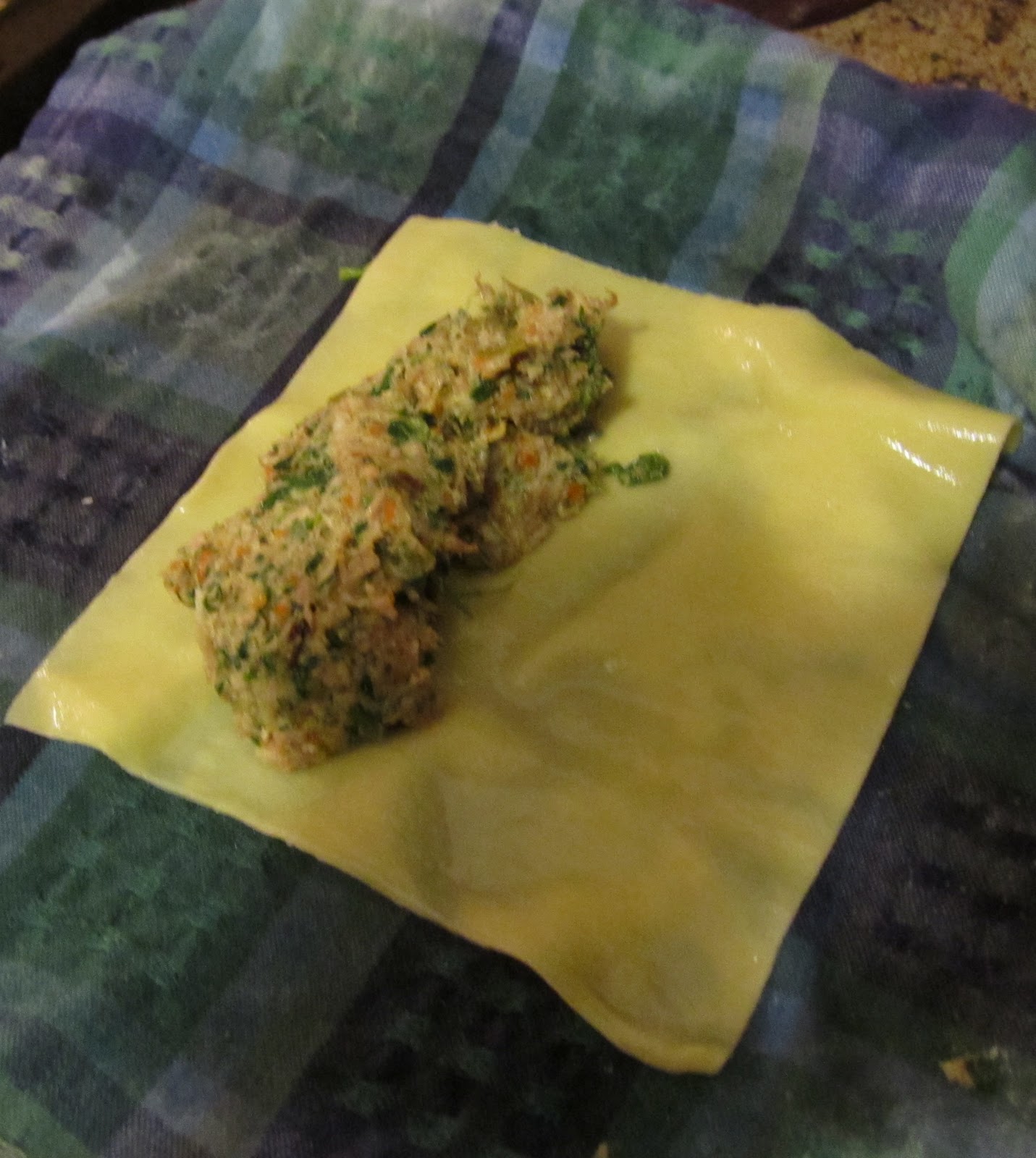
Rolling up the cannelloni

Ready to be topped with more Bechamel

Wednesday, February 9, 2011

Doubling Down on Sauce

Left to right, tomato sauce and Bolognese sauce

This week my grocery list included the ingredients for mirepoix or the “trinity” — onions, celery and carrots. Because it’s winter and Persephone Farm isn’t doing any farmers’ markets right now, I’ve been getting produce from a grocery store. (Although, I still have plenty of onions in my root cellar!) Grocery-store produce just can’t compare to Persephone’s fresh-picked taste and overall goodness. Also, stuff I get from the store doesn’t last as long in my fridge, so to get the most for my money, I use the produce I buy quickly and in more than one meal.

Since I needed carrots and celery for cannelloni, I decided to make Bolognese and tomato sauce, too. I hadn’t planned on making both sauces on the same day, but I started to get out the ingredients for the Bolognese (a savory tomato sauce with ground pork and beef) and realized it’d be silly not to make both sauces at once. They both start with the trinity, so if I was going to chop up celery, onion and carrots for one recipe I figured I might as well do it for both.

Mirepoix - onion, celery and carrot
I usually don’t get out my Cuisinart food processor for chopping small amounts, but since I was doing large quantities I knew it would save time. I was following Lidia Bastianich’s recipes. But I did tweak the Bolognese recipe. I doubled the amount of mirepoix and crushed tomatoes, while keeping the amount of meat the same. I also mixed a little beef broth concentrate into to the water the recipe said to add every so often to keep the sauce around the same level.

Huge can o' tomatoes
With the intent to make sauce, I picked up a huge can of crushed tomatoes from Costco, where I go every few months to stock up on things such as toilet paper and dish detergent. (I normally don’t buy much food from Costco since we don’t eat a lot of processed food.)
The tomato sauce finished cooking first. The Bolognese cooks for two to three hours, so I’d just give it a stir every once in awhile and add broth as needed.
The Bolognese turned out perfectly. It was meaty and rich. We could have skipped the gnocchi and just eaten it with fresh-baked bread and grated cheese. We’ll put both sauces in the freezer and cut off chunks as needed to sauce fresh pasta or spread on pizza crust. So I saved time by making both sauces at once — and money by not letting produce go to waste. This also means that in the future we’ll have delicious, healthful meals with a slow-cooked taste in the amount of time it takes to defrost the sauce and cook pasta. Double the sauce, double the bonus.
The Bolognese simmered for three hours


Links:
Lidia's Bolognese


Thursday, February 3, 2011

Noodling Around


I’ve had my eye on the Kitchen-Aid pasta roller and cutter attachments for quite some time. And thanks to the generosity of my in-laws, we finally get to enjoy fresh homemade pasta.

Since I had some spicy, peppery arugula from our surprise Persephone Farm delivery, I decided to make some pappardelle noodles with my new toy. We’d made Summer Pappardelle with Tomatoes, Arugula, and Parmesan from Cooking Light before and I decided to adapt it to become a winter dish.

Making the pasta isn’t hard, but it’s time consuming. After initially kneading the dough, it has to rest for at least an hour before you can roll it out. I followed the pasta recipe from Lidia’s Italian-American Kitchen and used Martha Stewart’s Cooking School as a visual guide because it has such lovely step-by-step photos. The recipe called for four eggs, and I had one Persephone Farm egg left, which I used. If you look at the photo of the yolks, it’s easy to spot which one is from a chicken that roams around eating organic grass and bugs. It’s obviously a much richer yellow.  

Rolling the pasta out with the attachment was fun and I was able to do it quickly by myself. I used a pasta cutter that looked like a mini-pizza cutter to make 1-inch wide pasta ribbons. (This cutter also has a fluted-edged cutter that I’ve used for ravioli — and Trevor and my dad have used to seal a window screen, but that’s another story.)

Also, I cut some large pasta squares that I’m drying and will use it to make cannelloni for Valentine’s Day. Lidia’s homemade cannelloni is one of the reasons I wanted to get this pasta roller. I rolled out pasta by hand with a rolling pin for that meal and will never do that again!

Once the pasta was cut and rested, I made the quick sauce. Instead of using out-of-season cherry tomatoes, I used about 1 ½ cups of homemade garden tomato sauce that we usually have in the freezer. And I sautéed the arugula to wilt it slightly. I really can’t say enough about the homemade pasta. It’s completely different from commercially made dried pasta. It was flavorful, silky and light, and really let the flavors in the sauce shine. I don’t think we’ll ever go back to pasta from a box.

Links:


Tuesday, March 23, 2010

Spring Forward

This Saturday was the first day of the 2010 Portland Farmers’ Market in the South Park Blocks. And the weather couldn’t have been more gorgeous. Trevor is back at the Persephone Farm stand and that means more fresh veggies for us. It is still a little early in the season, so all the Persephone greens were snapped up pretty quickly. But there were plenty of leeks and a few heads of cabbage, so I threw them in my market bag with a Lidia Bastianich recipe in mind: Whole Wheat Pasta with Sausage, Leeks and Fontina.
It’s a wonderfully flavorful vegetable-packed pasta dish. If you love pasta, but get tired of tomato sauce, give this a try. Leeks and shredded cabbage cook down to an almost silky texture. The sausage adds some heat and the whole-wheat pasta is really filling.
This recipe was published in Lidia’s Italian-American Kitchen and Cooking Light magazine. I’ve included the link to the Cooking Light version since it’s available. The recipe in her book calls for more olive oil and three links of sausage instead of one, and more cheese. I used the version in her cookbook and chose leaner turkey sausage instead of pork. Either way, the dish is delicious.


Links:
Whole Wheat Pasta with Sausage, Leeks and Fontina

Tuesday, January 5, 2010

Pork with Pork

If, like Samuel L. Jackson’s character in Pulp Fiction, you don’t “dig on swine,” I feel sorry for you. I’m with John Travolta’s character, “Pork chops are gooood. Bacon is goooood.”

The only better thing than pork, is pork with pork. As in pork scallopine Saltimbocca. It’s a boneless pork loin chop pounded good and thin, then topped with sage leaves and prosciutto. Yum. This is another Lidia Bastianch recipe. And one of our all-time favorites.  It’s the kind of meal that makes you want to clean off all the crap on the kitchen table, light some candles and use your good cloth napkins.

Lidia recommends pairing the scallopine with polenta, but I first made it with Parmesan mashed potatoes instead and have never looked back. We also sauté some spinach and garlic with olive oil as she recommends.

And it’s not too hard to prepare. The pork sautés quickly, and the tantalizing wine sauce just takes a few more minutes. For this meal, the potatoes take the longest. I do have one tip, though. If you are using frozen pork chops, made sure they are completely thawed before trying to pound them out. If they are still frozen in parts, you won’t be able to pound them evenly. You’ll have big hunks and then holes in other spots. Also, use the bumpy side of the tenderizer just for a few whacks, then switch to the smooth side to avoid getting holes in the meat.  But really this is a relatively easy meal that is fancy enough for company. But it’s great anywhere, anytime. We even made this on a camping trip once.

Links:
Lidia’s Italian-American Kitchen


Monday, January 4, 2010

Rhymes with pokey

We’re heading into the bleak season for locavores. The PSU Farmers’ Market is closed until spring and opportunities for getting local food are fewer and far between. But I’m thankful for two things. 1. The Hillsdale Farmers’ Market is open two Sundays a month until May and 2. Trevor’s early Christmas present to me: a burlap sack filled with Persephone Farm potatoes, onions, shallots and a few winter squash.

We will be eating a lot of potatoes this winter. But when it’s cold and gray outside, steaming potatoes in just about any presentation are so filling and warm. One of the best uses for all these potatoes is gnocchi. We get our Potato Gnocchi recipe from Lidia Bastianch’s Lidia’s Italian-American Cookbook. I think I’ve mentioned how Trevor and I had a love-hate relationship with this book when we first started cooking with it. Well it’s now changed to a walking-around-in-a-daze, almost-too-infatuated-to-eat, straight-up love relationship.

But the first time we made gnocchi, I think I was cursing Lidia’s name. Our first ill-fated, gnocchi-making adventure lasted about six hours. By the time we were finished, the kitchen was covered in tomato sauce, and Trevor had sustained a deep gash in his hand and had bled all over his shoes. It’s really a testament to the strength of our relationship that we remained married after that ordeal. And somehow we decided it’d be a good idea to make gnocchi again.


To be fair, our main frustration in making the recipe that first time is that we didn’t know what was (or have) a potato ricer. I had a vague idea, and Trevor attempted to fashion one from a can — hence blood-covered shoes. A potato ricer looks like a giant garlic press. Peeled, hot boiled potatoes are squished through it and fluffy little strands of potatoes come out. Another key to good gnocchi is making sure the potatoes are completely cool after they are riced.

And getting the right amount of flour can be tricky. I’ve learned with this recipe to measure out 2 cups of flour, set a timer for 10 minutes and then slowly fold/knead in the flour a little at a time until the time is up or almost up. The dough shouldn’t be too sticky or too dry. The only way to really learn how to get it right is to make the gnocchi a few times.

Happily, today we are gnocchi pros. It’s still time-consuming (more like two hours instead of six), but we put the extra gnocchi in the freezer and have many more meals that take only as long as it takes to boil water and heat up sauce.
Usually we have Lidia’s tomato sauce with the gnocchi, but a few weeks ago we decided to try her Gorgonzola Sauce, also in her Italian-American cookbook. It took our gnocchi to a whole new level. Of course, how could a sauce with butter, two cheeses and cream not be heavenly? Especially with Rogue Creamery’s Oregonzola cheese. It was like the best mac and cheese you’ve ever had in your life. I highly recommend it for your must-try list.

Links:
Lidia’s Italian-American Cookbook
Oregonzola cheese